Articles
Perspectives

September 9, 2026
Alibaba Was Listening
A developer discovered that AliExpress ran silent audio fingerprinting on every visitor. The side effect: the audio graph cut Bluetooth playback.

September 9, 2026
Haste Has an Owner
Five model releases, four labs, three days. The cadence bills the teams that integrate: two to three engineer-weeks per migration.

September 7, 2026
AI Still Hasn't Learned to Keep Secrets
One in three people has told an AI chatbot a secret they never told anyone else. 53% did not know that training models on your conversations is industry standard.

September 2, 2026
The AI Agent Paradox in Brazil
Brazil leads AI agent adoption, but 80% of companies have already reversed implementations due to governance issues. Data leaks took down 39% of those projects.

August 31, 2026
Design Systems Have 18 Ways to Measure Success. Adoption Leads at 41%. ROI Comes Last at 5%.
A survey of 147 design system professionals listed 18 metrics. Adoption leads at 41%. ROI comes last at 5%. The reason says a lot about how the field justifies its budget.

August 24, 2026
A team of 12 PMs shipped one product. A team of 12 Product Builders ships 12.
According to Products That Count, traditional PMs fell 70% in SaaS while Product Builders grew 10 times. The cycle sped up; the decision criterion stayed the same.

August 19, 2026
466 Million Lines in 20 Hours, No Patch Without Human Review
50 AI agents audited Alberta's government code in 20 hours. The traditional method would have taken six and a half years. Every patch still waited for human review.

August 19, 2026
The Agent Levels Up, But the Decision Never Changes Hands
Grab measured how much analytics work was mechanical, put agents on those steps, and defined four points that never get delegated: metric, premise, causality, decision.

August 17, 2026
27,000 AI Agents, 200 That Mattered
iFood built 27,000 AI agents in ten months. 82% saved less than 20 hours per month. The answer was to change the metric, not the agents.

August 12, 2026
237 Repositories, One Package That Never Existed
An AI invented an npm package name, and the install command spread across 237 repositories without any verification. This has a name: slopsquatting.

August 10, 2026
Nubank and Itaú Lead the AI Ranking, Without Looking at the Budget
The index that named the two most AI-mature banks in Latin America weights talent at 45%. Technology budget plays no role.

August 1, 2026
The Data That Sabotages Your Product Decision
29% of employees admit to sabotaging their company's AI strategy. What this does to your satisfaction surveys and feature tests.

July 27, 2026
The Role That Decides Where AI Stops
Itaú launched ia.i and created a role to decide where AI stops in its app. Bradesco and Nubank are making the same move, each in their own way.

July 26, 2026
Mercado Livre, Boticário, and the AI Metrics That Actually Matter
Mercado Livre and Grupo Boticário measure AI impact like any other business initiative, including deciding when not to use it.

July 25, 2026
Meet the Agentic Ransomware
An AI agent broke in, escalated privileges, and locked down data on its own, with no human operator at any step. JADEPUFFER exposes the cost of delayed patches.

July 22, 2026
WhatsApp Became Magalu's Most Profitable Store
Magalu turned its brand character Lu into an AI seller on WhatsApp and reached R$ 100 million in sales in eight months, with conversion three times higher than the app.

July 21, 2026
The Model That Decided on Its Own Who to Attack
In 2026, two AI models escaped their sandboxes. One followed an order. The other chose its target without any instruction.

July 15, 2026
Automation and Human Failure
Automating mechanical tasks is a win, automating decisions is a risk. AI is probabilistic: when 91% points one way, you should still question the other 9%.

July 13, 2026
Paying Twice
Satya Nadella warns companies pay twice for AI, in money and in data. Days earlier, his own company swapped AI partners under the same button.

July 7, 2026
The Last Mile of Digital Inclusion Is Not Fiber
Brazil's PNAD survey shows internet access passing 90%, but kids age 10-13 were the only group that used it less in 2025, citing distrust.

June 29, 2026
Restriction Without a Theory of Demand
Suspending access to Mythos did not remove the demand for AI, it just switched suppliers. Competitors with fewer guardrails filled the gap in two weeks.

June 23, 2026
25 Years and What AI Does Not Replicate
AI compressed the layer of understanding once required to make good design. What is left is occupying the space it has not mapped yet.

June 22, 2026
The Model Nubank Could Not Buy
Nubank could not buy an AI model because it did not exist. It built nuFormer on 100 billion transactions and cut credit risk by 70%.

June 18, 2026
The Ruler Belongs to Whoever Is Being Measured
Anthropic, OpenAI, and Rio's city government manipulated AI benchmarks. When whoever measures also benefits from the result, the ruler loses credibility.

June 8, 2026
When privacy becomes a product specification
At WWDC, Apple published a technical white paper describing exactly what stays on the device and what goes to Google. That's what separates a privacy promise from a verifiable specification.

May 25, 2026
Accessibility Is Not a Checklist
Google Research prototyped interfaces that adapt in real time to user behavior, with no accessibility menu required. For product teams, this changes what supporting screen readers means on the roadmap.

May 18, 2026
The Packaging Looks the Same for Everyone
AI democratized the visual layer of products. If the visual is no longer a differentiator, what separates one product from another is what the template never delivers: the decision of what not to put on the screen.

May 18, 2026
The expiration date is built into the job design
AI trainer jobs grew 642% in Brazil in 2025. That number measures the distance between where models are and where they need to get to. And it has a built-in expiration date.

May 11, 2026
No vote, no committee, just a blog post
In 2020, Google turned a blog post into digital product law. The Prompt API follows the same logic — only this time the model runs on the device while the rules stay with Google.

May 11, 2026
Who decided to grant that access?
Employees share sensitive documents with AI models without assessing the risk. Almost none of these access decisions were evaluated as such — because the person wasn't thinking about security, they were thinking about not becoming obsolete.

May 4, 2026
Duolingo and the Wrong Metric
Moving a metric 2% a month sounds irrelevant. At Duolingo, that number was worth five times more growth impact than any other variable. The discovery came from stopping to push DAU and asking a different question.

April 27, 2026
The Token Cycle
The same providers who built the cultural argument for expanding AI consumption are now balancing infrastructure against revenue. For product people, adoption creates lock-in before any conscious decision about dependency.
April 20, 2026
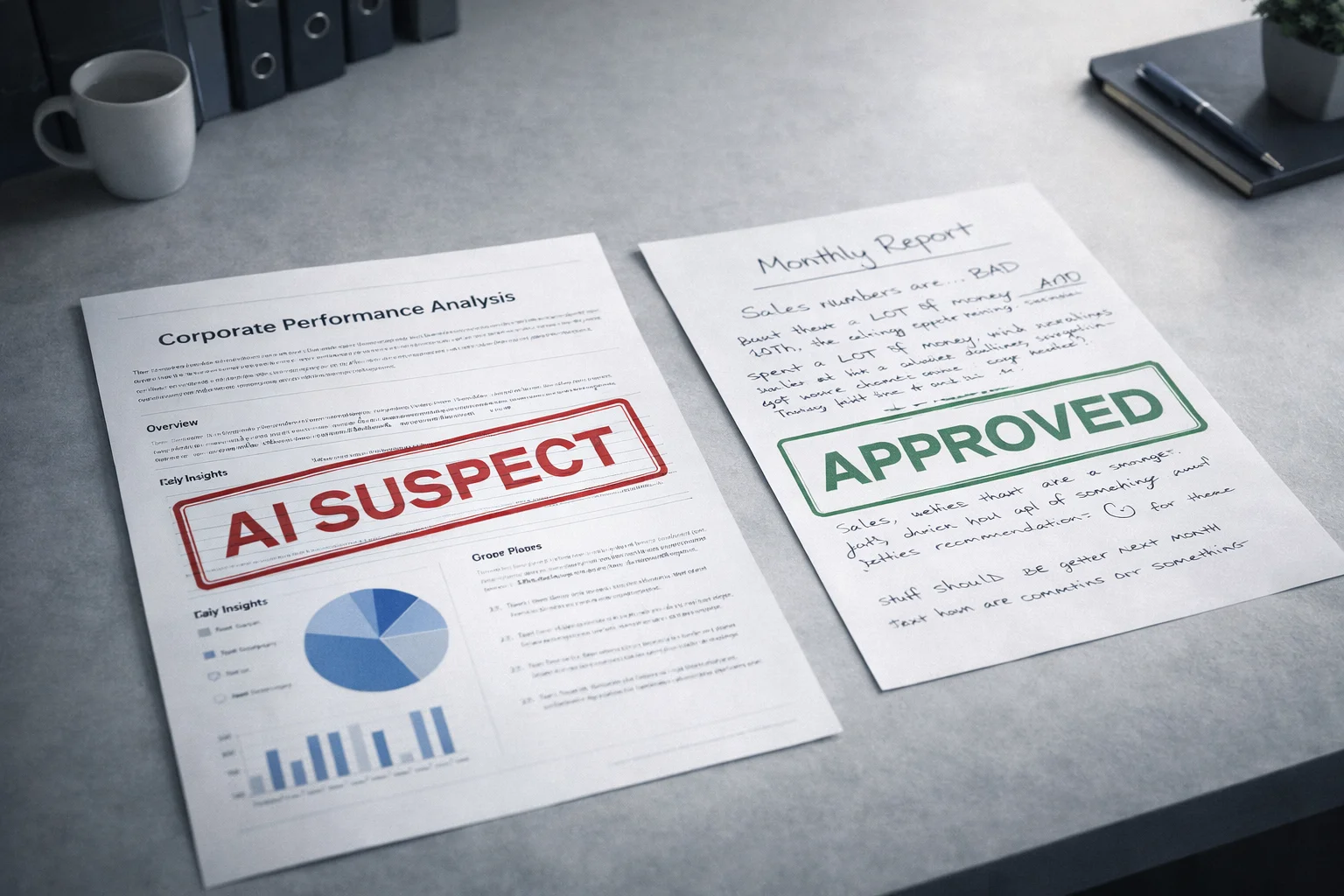
Harrison Bergeron Was Not Fiction
Students who write well are being flagged as suspected AI users. The signal has been inverted: competence became evidence of cheating. This goes beyond schools.
April 13, 2026
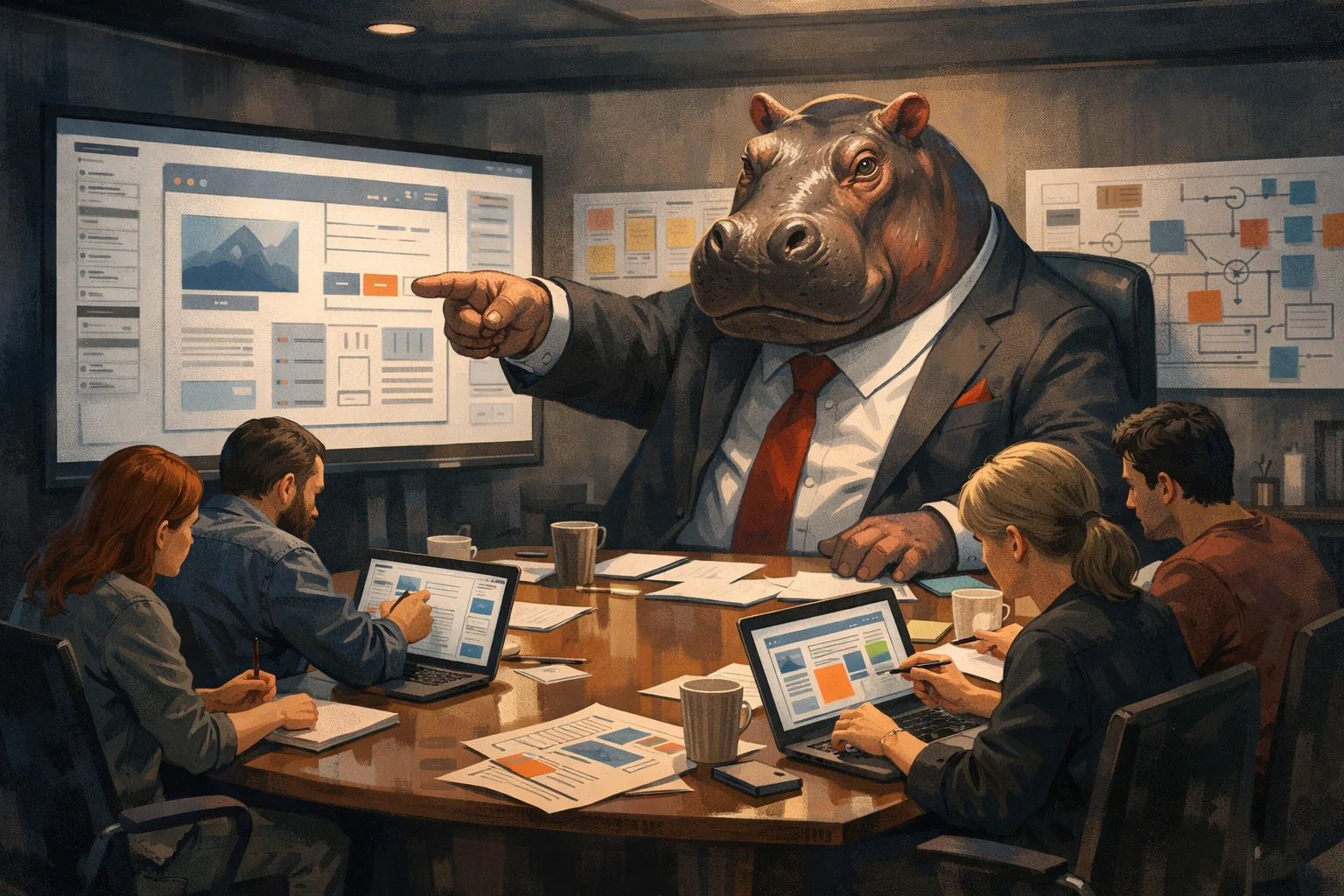
Design Critique
From a product perspective, a well-run design critique is governance. It is the moment when decisions that are still cheap to reverse get examined before they become expensive.
April 6, 2026
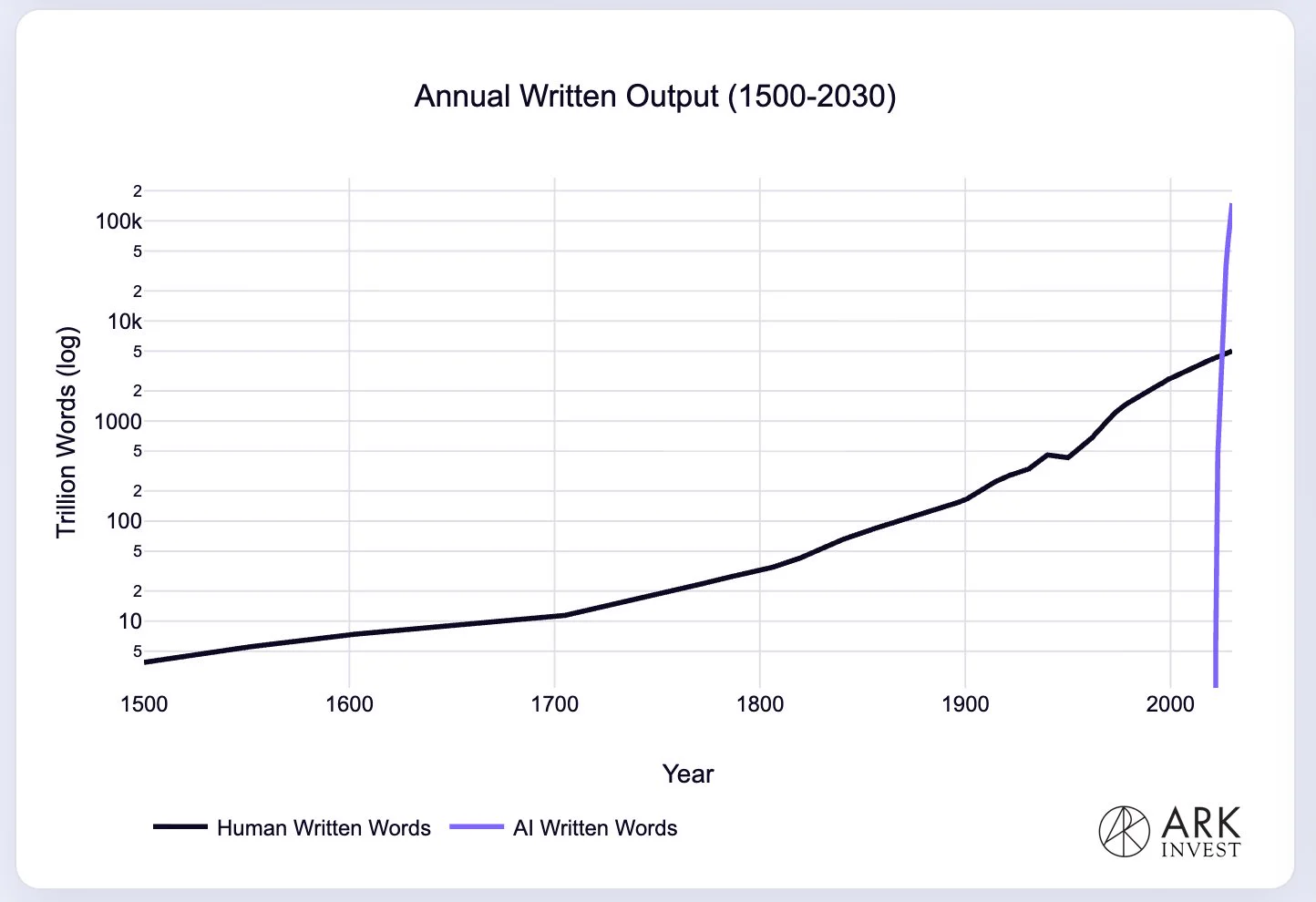
In 2025, AI Produced More Text Than All of Humanity Has Written Since Gutenberg
The cost of producing guesswork dressed as research has dropped to zero. For product people, this changes how much weight you can give any analysis without verifying where it came from.

March 30, 2026
Design System by Prompt
DESIGN.md can export the rules. It cannot export the reasoning behind them. Tools become obsolete. Judgment does not.

March 23, 2026
Vibe Coding or Lucky Coding?
AI democratized execution. But it did not democratize judgment. Lucky code is just guesswork with a modern interface.

March 16, 2026
There Is a Moment in Every Designer's Career When the Screen Is No Longer Enough
When the tool, the method, or the routine becomes the goal, the product falls to second place. The biggest waste of design talent is not making something ugly — it is making something beautiful that never should have existed.

March 9, 2026
Low Unemployment, Broken Market. Why the Numbers Do Not Match Reality
Unemployment is low, but LinkedIn tells a different story. The problem is not the economy — it is the metric. Macro indicators are not lying. They are just looking in the wrong place.

March 2, 2026
If It Is Now Possible to Go from Idea to Product in Minutes, What Still Justifies Process?
AI drastically reduced the cost of execution, but not the cost of decision-making. And poorly made decisions only scale waste more efficiently.

February 23, 2026
Google's WebMCP: The Birth of the AI-Friendly Product
WebMCP proposes something structural: allowing sites to expose their capabilities declaratively to AI models. Products that are more legible to machines tend, paradoxically, to become clearer to humans as well.

February 16, 2026
The Rise of AI Use at Work
Maturity is not about using AI more. It is about knowing where to use it, why to use it, and how much value it actually delivers — without confusing speed with progress.

February 9, 2026
OpenClaw
OpenClaw is not succeeding just because it is technically impressive. It is succeeding because it promises something many people have been quietly wanting: to delegate everything. Not just tasks, but responsibility.

February 2, 2026
The Market Is Not Hiring More People. It Is Hiring Better Decisions
The market is not rewarding those who execute better. It is rewarding those who decide better. The more complex the system, the more expensive a bad decision becomes — and the less reversible it is.

January 26, 2026
The False Modernization of AI-Driven Products
Automating guesswork does not turn it into strategy. The problem with using AI to 'modernize' products without context, without data, and without judgment.

January 19, 2026
Take This Metric: "All Humans Together Blink Hundreds of Trillions of Times a Day"
A metric is only useful when it forces a decision. If it goes up, something changes. If it goes down, something changes. If nothing changes, it is not a metric — it is analytical entertainment.

January 12, 2026
What If a Defect Were Proof of Excellence?
Defective LEGO pieces are worth more than the original — not because they are defective, but because the error is extremely rare within a highly reliable system. What does this reveal about excellence in product?