February 16, 2026
The Rise of AI Use at Work
Maturity is not about using AI more. It is about knowing where to use it, why to use it, and how much value it actually delivers — without confusing speed with progress.
Everyone is celebrating that AI use at work has grown. The question almost no one asks is: grown to do what?
Today, "using AI" has become an elastic concept. It covers everything from asking for help writing an email to copying and pasting a prompt written by an AI guru and calling that productivity. Everything gets lumped together. The metric goes up; understanding does not always follow.
A recent Anthropic study surfaced an uncomfortable finding. In programming, AI helps with many tasks, but people who rely on it too heavily perform worse when it comes to understanding code, debugging errors, and explaining what was done. On average, 17% worse. Faster to start, more fragile to sustain over time.
This does not surprise me. Just a few weeks away from routine is enough to feel how reasoning gets rusty. Now imagine months of delegating everything. The interesting question is not whether this degrades technical mastery today, but whether that will continue to matter in the near future.
If AI itself implements, tests, and fixes code on its own, perhaps the value no longer lies in the line of code but in the design of the solution, the architecture, the trade-off decisions. The problem is that this has not been measured. We are debating skill loss on one axis without knowing whether there has been any real gain on another.
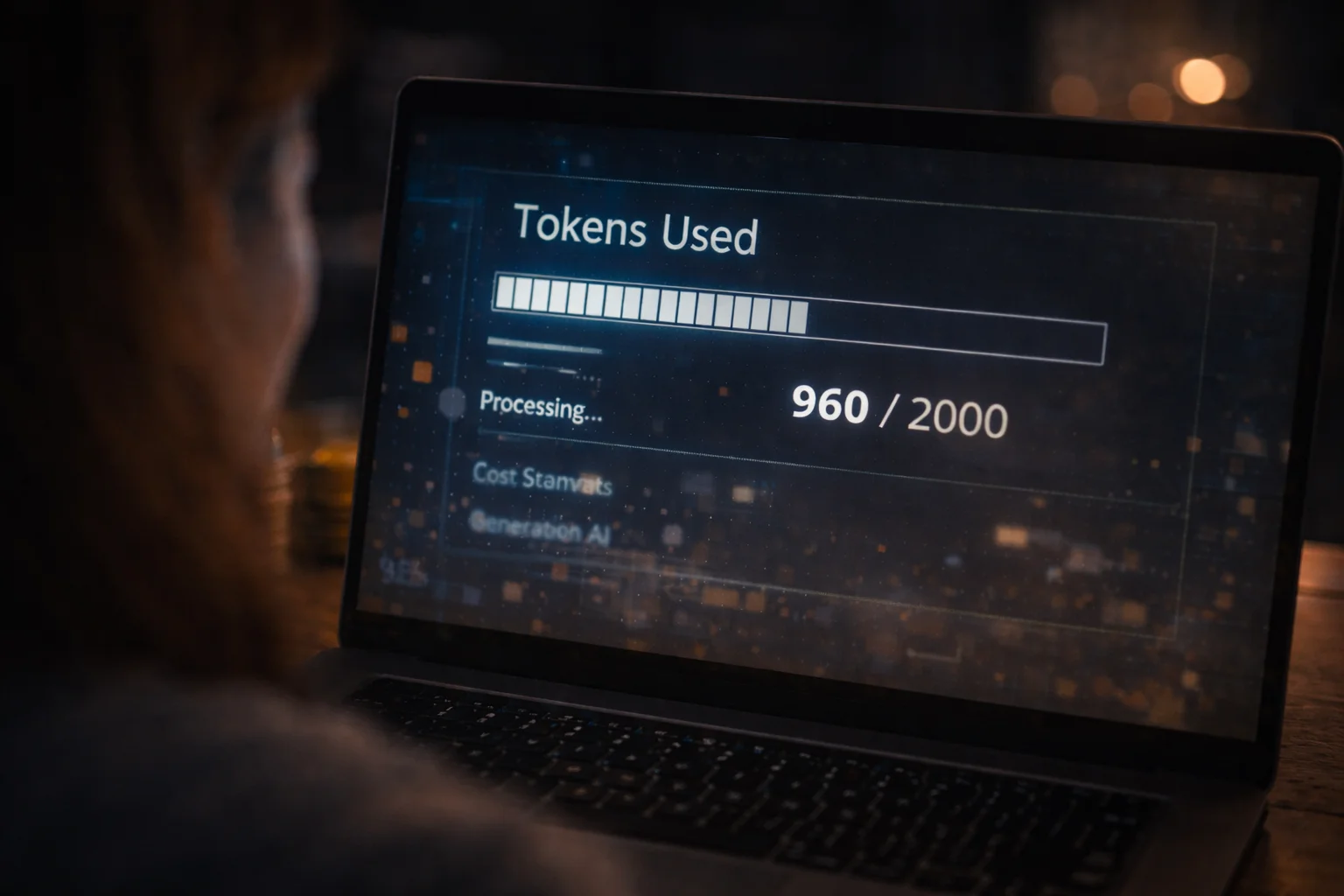
And there is another point that rarely comes up: AI is not a cheap loop running in the background. Every prompt has a cost. Every token counts. Every "intelligent" automation goes straight into the cost of acquiring, serving, and retaining a user. At some point, someone will have to answer whether the modern solution is actually worth more than a simple, predictable, and cheap approach. Using more, in this case, also means spending more.
None of this is an argument against AI. On the contrary. It is an invitation to use it better.
Use will keep growing. And that is great. But maturity is not about using more. It is about knowing where to use it, why to use it, and how much value it actually delivers, without confusing speed with progress.