January 19, 2026
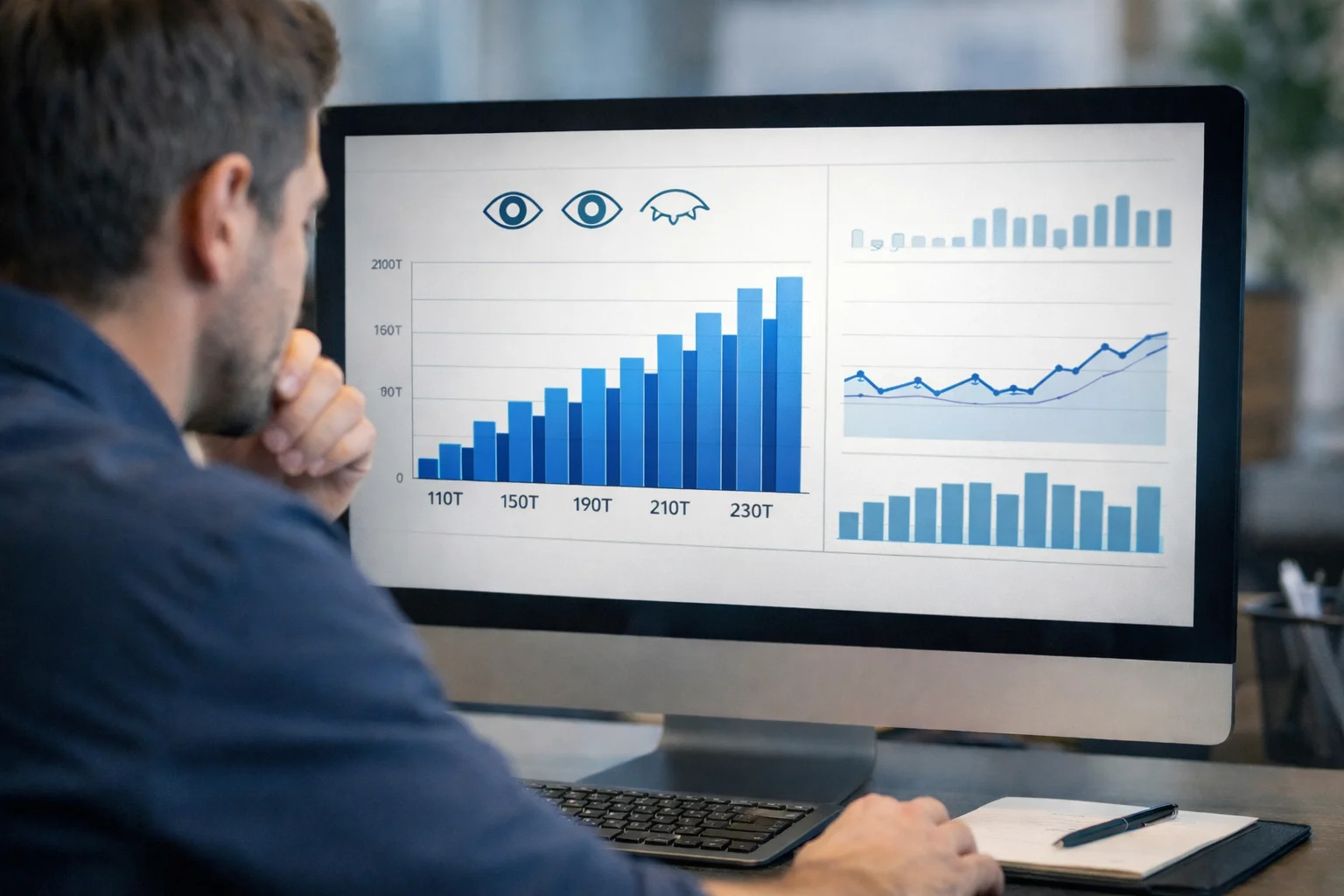
Take This Metric: "All Humans Together Blink Hundreds of Trillions of Times a Day"
A metric is only useful when it forces a decision. If it goes up, something changes. If it goes down, something changes. If nothing changes, it is not a metric — it is analytical entertainment.
A person blinks, on average, 15 times per minute. Multiply by the world population and you get hundreds of trillions of human blinks per day.
It is impressive. It is correct. It is useless.
It does not indicate a problem. It does not guide a decision. It does not change anything at all.
If that number doubles tomorrow, nobody does anything. If it drops by half, same thing. It exists only because it was possible to measure. Does that sound familiar?
In product, measuring everything has never been easier. Clicks, time, scroll depth, events, engagement. The requirement to be data-driven has become standard. The problem is that, for many people, measuring has become the goal rather than the means.
Numbers became protagonists. Critical thinking became a supporting role.
Correlation becomes explanation. Curiosity becomes a KPI. Dashboards start guiding decisions with no clear link to value, problems, or real outcomes.
That is how flawless OKRs get created. And mediocre products.
A metric is only useful when it forces a decision. If it goes up, something changes. If it goes down, something changes.
If nothing changes, it is not a metric. It is analytical entertainment.
Nice to look at. Harmless. Like knowing how many times humanity blinks per day.
If you lead product, technology, or data and have ever wondered whether your numbers are guiding decisions or just filling slides, this is a conversation worth continuing.