April 13, 2026
Design Critique
From a product perspective, a well-run design critique is governance. It is the moment when decisions that are still cheap to reverse get examined before they become expensive.
Jakob Nielsen recently published a detailed analysis of why design critiques fail. He mapped 13 reasons, but behind all of them a single pattern repeats: the meeting stops evaluating the design and starts reflecting hierarchy, personal taste, and organizational politics.
The problem is not abstract. It has a cost. And that cost shows up in three layers that are rarely connected in the same conversation.
The first is visible. The designer redoes something that was correct because someone with authority preferred otherwise. That is the rework that lands in the next sprint without a clear explanation, consuming time that should be generating progress.
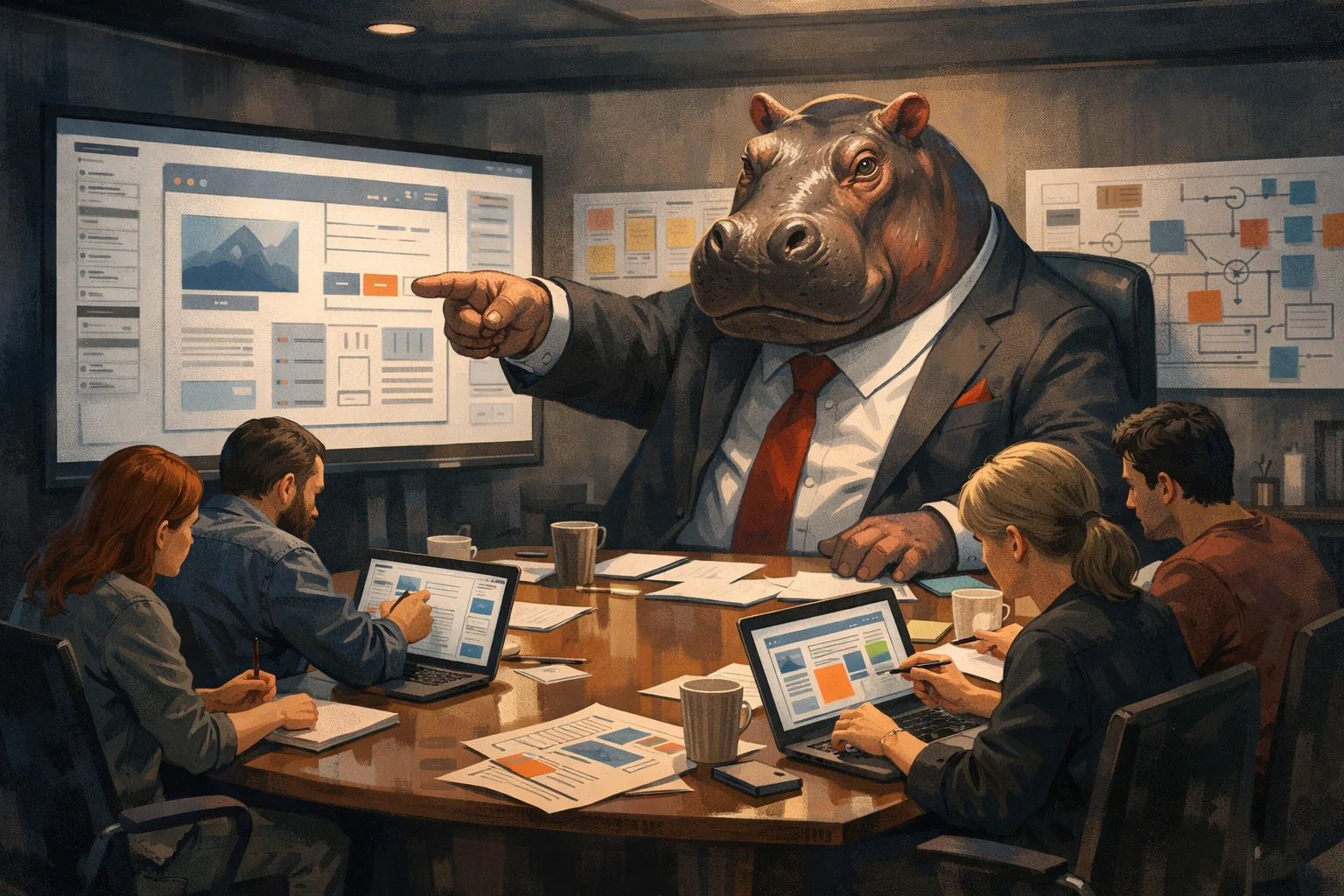
The second is more expensive and less obvious. When a critique has no shared criteria, the product decision that comes out of the meeting does not reflect the best collective judgment. It reflects the opinion of whoever spoke loudest or arrived earliest. Nielsen calls this the HiPPO effect: the Highest Paid Person's Opinion. The approved design is not necessarily the most appropriate for the user. It is the one that survived the room's power dynamics.
The third is invisible until it becomes a problem. When feedback without technical vocabulary replaces usability judgment, aesthetic decisions undo accessibility and visual hierarchy work that nobody notices in the meeting. That cost does not appear in the minutes. It shows up in abandonment metrics, support complaints, and rework that nobody can explain.
Nielsen recommends anchoring all feedback to personas, business goals, and usability principles. Not as bureaucracy, but because a critique without criteria does not examine the design. It just redistributes opinions with more formality.
From a product perspective, a well-run design critique is governance. It is the moment when decisions that are still cheap to reverse get examined before they become expensive.
When that moment is wasted, the cost does not disappear. It just moves forward. To the sprint that will redo what was approved in the wrong meeting.
Source: https://lnkd.in/d47mqUeE