May 11, 2026
Who decided to grant that access?
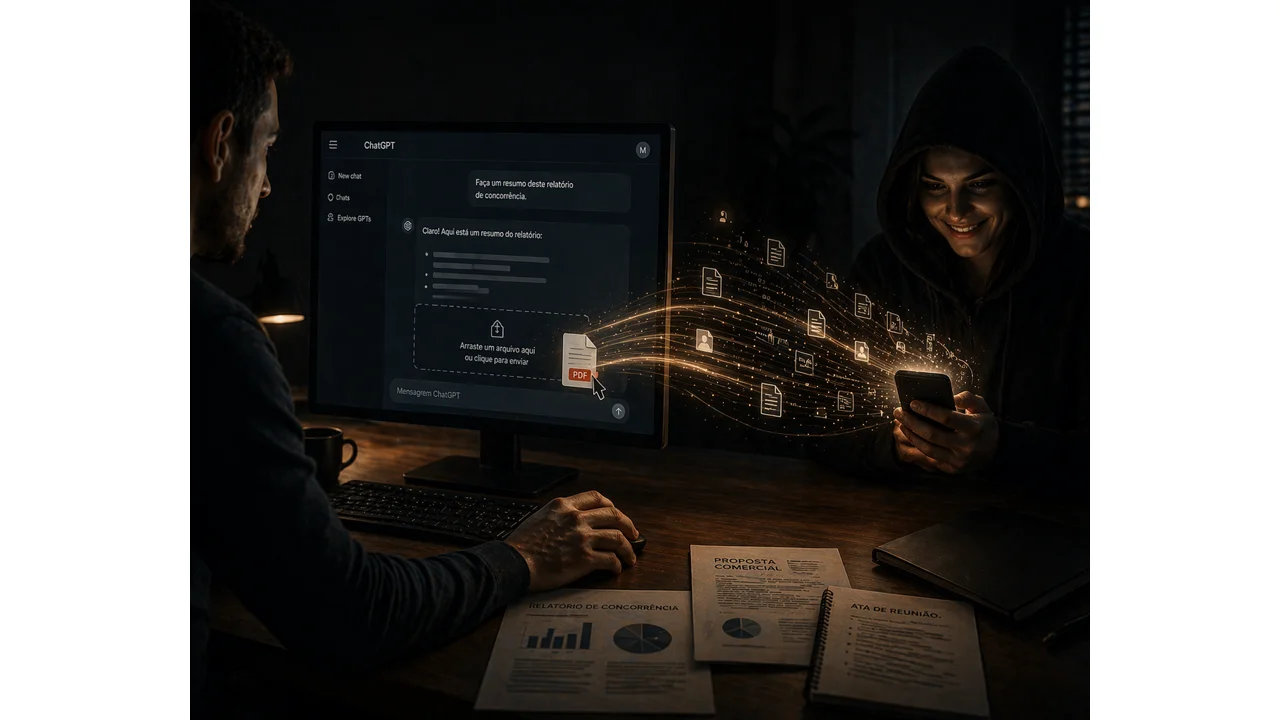
Employees share sensitive documents with AI models without assessing the risk. Almost none of these access decisions were evaluated as such — because the person wasn't thinking about security, they were thinking about not becoming obsolete.
Before, you would analyze who was asking for your phone number. Why does this person want my contact? Do I want to answer that call? Today, anyone asks for WhatsApp and, write this down: 9... . The number is the same, so is the risk of exposing your contact to a stranger, but the cost of hesitating became too high.
In companies, the same mechanism is at work. The employee processes the competitive intelligence report in a chat because they needed a quick summary, uploads the commercial proposal to format the text, tosses product specifications to extract next steps. The same person who wouldn't show those documents to the colleague sitting next to them just shared everything with a model whose training policies they've never read.
For the record, each platform has its own policy: some use your inputs by default, unless you disable the option; others only use them if you authorize it, but most users never read the fine print. And most companies also don't know their employees are doing this on their behalf. Really? Or did they openly decide to look the other way hoping for better results?
The overlooked data point: 96% of small Brazilian companies know about generative AI, but only 15% use it regularly (Sebrae, 2025). The feeling of falling behind doesn't reflect the market. It reflects an industry that profits from keeping that feeling alive. Researchers call it FOO, Fear of Obsolescence, which differs from FOMO because it isn't tied to any specific opportunity, but to the permanent fear of becoming professionally irrelevant. It distorts comparison because you see your colleagues' results but never their process.
Almost none of these access decisions were evaluated as risks because the person granting access wasn't thinking about security. They were thinking about not being left behind and appearing productive.
The question missing before the next upload: was this a decision, or did the fear of becoming obsolete decide for you?