July 27, 2026
The Role That Decides Where AI Stops
Itaú launched ia.i and created a role to decide where AI stops in its app. Bradesco and Nubank are making the same move, each in their own way.
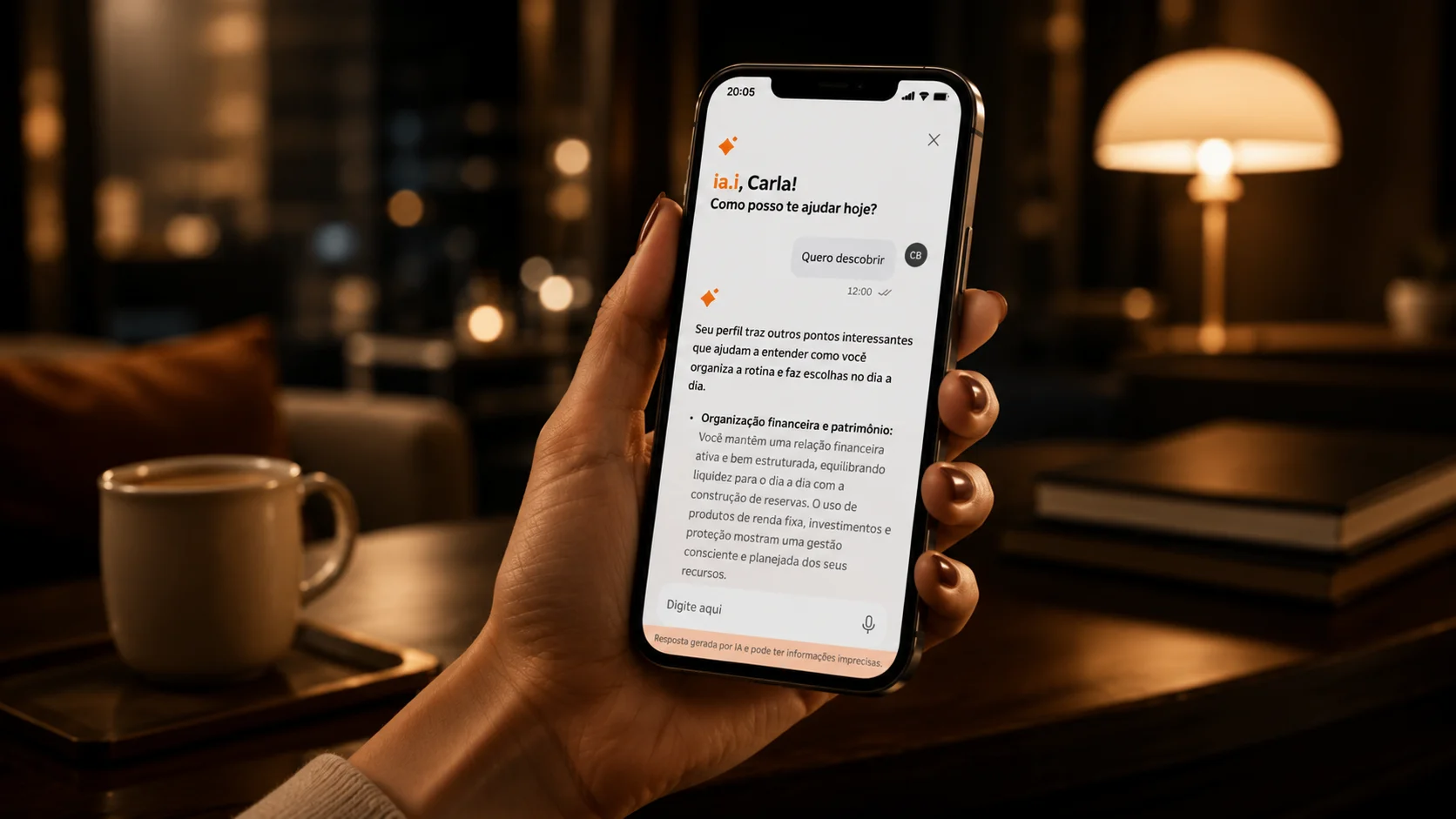
The ia.i, the chatbot Itaú placed on its app home screen this week, builds a chart of how much you spent on Uber month by month and tells you your average ticket. When you ask to compare the The One card with the Mastercard Black, the conversation takes you to the card signup screen and stops right there: the customer closes the deal, not the chatbot. In a category where AI in a banking app usually means pushing products, this was a deliberate choice to sell by betting on trust.
Behind ia.i sits several orchestrated models (GPT, Sonnet, Kimi, Qwen, Llama, according to the bank itself) with short and long-term memory between them. The screen also builds itself according to the question asked, and all AI-generated content carries an identifiable icon, letting the customer see immediately whether a number came from a human or a model. High technical complexity, with a simple, visible trust bar.
Itaú is not alone in this. Bradesco runs BIA for millions of customers and built Bridge, its own generative AI platform. Nubank is testing the AI Private Banker to bring credit recommendations beyond its private clients. Febraban showed that generative AI is a budget priority for 84% of banks in 2026, and the perception of ROI jumped from 5% to 19% in one year.
One detail worth noting: Itaú created a new role for this, Director of Strategy, Customer Lifecycle, and Artificial Intelligence. It is a role that decides where AI stops, what it shows on screen, and what remains a human function. Bradesco and Nubank are making the same move, each with their own role and their own way of deciding. Meanwhile, there are still people commenting on AI errors as if it were 2023. If someone asked for this evolution in your product tomorrow, could you deliver?
Sources: Tecnoblog · Portal ClienteSA · Finsiders Brasil · IT Forum